Author: scanmyqr

  • E-commerce Packaging QR Codes: Turn Unboxing into Retention

    E-commerce Packaging QR Codes: Turn Unboxing into Retention

    Your customer’s unboxing experience doesn’t last 30 seconds. But for most D2C brands, that’s exactly how long the engagement lasts.

    The package arrives. Your customer tears through the branded tape, pulls out the product, snaps a photo for Instagram, and moves on. The thank-you card gets trashed. The multi-page instruction manual goes straight to recycling. And the post-purchase relationship effectively ends.

    But what if it didn’t have to?

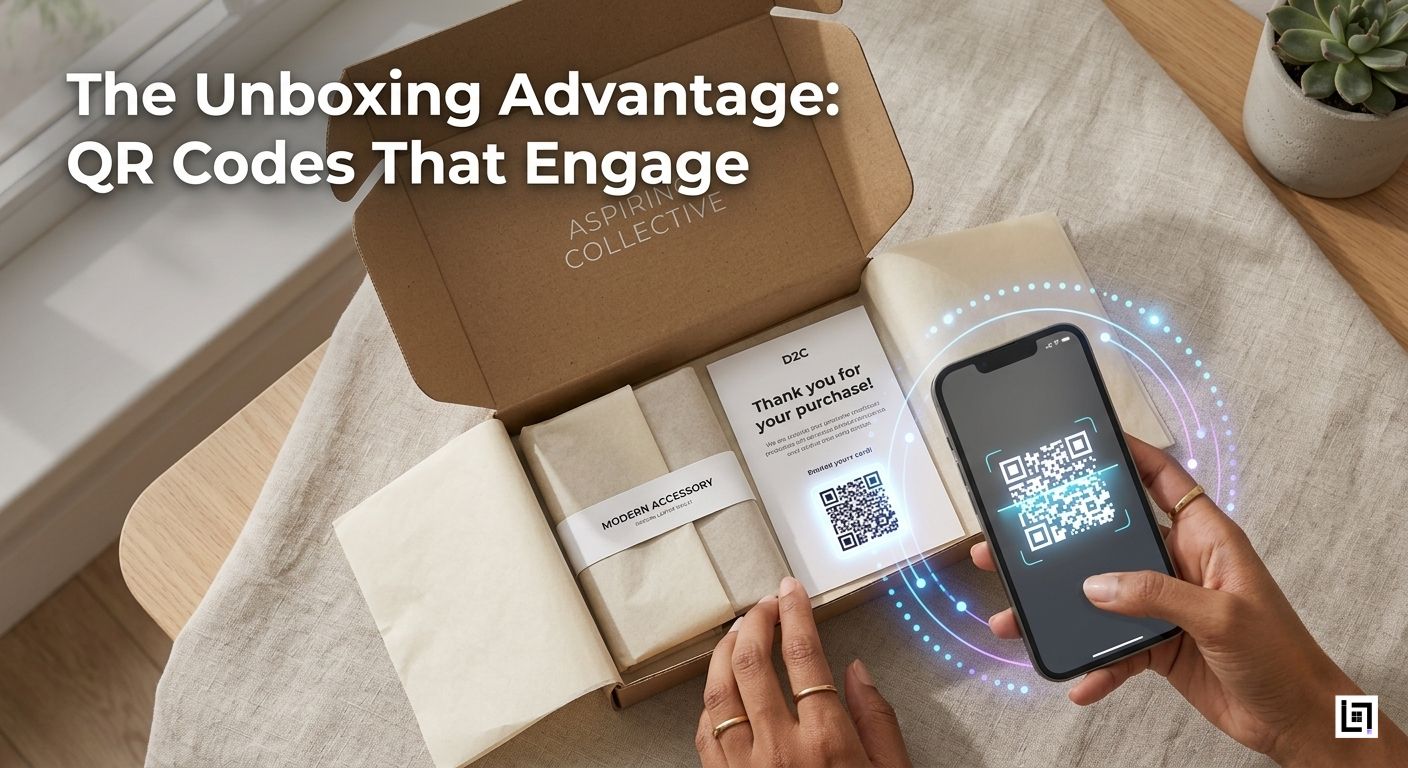
    The most sophisticated D2C brand QR strategy flips this script entirely. Instead of a one-time transaction, packaging becomes an engagement platform. Instead of customers being left in the dark, they get instant access to tutorials, support, and easy reordering. And instead of guessing whether anyone actually reads your inserts, you get concrete data showing exactly how customers interact with your packaging.

    This is the real unboxing advantage, and it starts with strategic custom packaging QR codes.

    Why Post-Purchase Engagement Matters

    Research shows that acquiring a new customer costs 5-25x more than retaining an existing one. Yet most D2C brands obsess over the purchase moment while ignoring the weeks and months after delivery.

    Here’s what’s actually happening during those weeks: Your customer is learning how to use your product, deciding if it’s worth recommending to friends, and determining whether they’ll buy again. These are critical moments – and they’re yours to influence.

    The solution isn’t sending yet another email. It’s embedding engagement directly into the unboxing experience with E-commerce packaging QR codes that make that journey seamless.

    The D2C Packaging QR Mix That Actually Works

    Your packaging can integrate multiple platforms in one smart, scannable format. Here’s the winning combination:

    1. Amazon Reorder QR (One-Click Replenishment)

    Place an Amazon product QR code prominently on your packaging – typically near where the customer would find satisfaction information. When they scan it, they land on a pre-built Amazon link to reorder consumables instantly.

    Why this works: Customers don’t need to search for your product again. They don’t need to visit your website or remember your brand name. One scan, one tap, and their next batch is on the way. This single addition can increase repeat purchase rates by 10-15%.

    2. TikTok Unboxing & Tutorial QR

    A TikTok unboxing QR code on your packaging is surprisingly powerful. Link to a short, fun setup video – maybe showing the product in action, styling tips, or the team story behind the brand.

    This transforms packaging from passive into interactive. Your customer doesn’t just own your product. They become part of your community. They see other people using it, get inspired, and (critically) share that video with their followers. It helps with getting organic reach.

    3. PDF User Manual QR (No Paper Waste)

    Instead of printing multi-language manuals that nobody reads, print one elegant PDF user manual QR code. Your customer can access the full guide in their preferred language, on their phone, instantly.

    This does two things: It saves you money on printing and packaging weight (which reduces shipping costs), and it gives you data. You’ll see exactly how many customers actually read your documentation insight that helps you improve product design and packaging clarity.

    4. Linktree Support Hub QR (Customer Support + Warranties)

    A Linktree support QR acts as your post-purchase command center. Link to FAQs, warranty information, contact support, request a return, or file a damage claim. Everything in one organized landing page.

    This reduces support ticket volume (customers find answers fast) while improving satisfaction (they don’t have to hunt for information).

    The Hidden Advantage: Post-Purchase Tracking

    Here’s what separates a basic QR strategy from a winning D2C brand QR strategy: data.

    With traditional packaging inserts, you have zero visibility into what customers actually do with them. Does anyone read that thank-you card? Do they bother looking at the discount code? You’re flying blind.

    Trackable QR for e-commerce changes everything. When you use dynamic QR on packaging, every scan is tracked. You can see:

    • Engagement rates: What percentage of customers actually scan your codes?
    • Timing: When do they scan? Immediately upon unboxing? Days later?
    • Which codes work: Is your Amazon reorder link getting 100 scans per week, or zero?
    • Geographic patterns: Which regions engage most with your TikTok video?
    • Device data: Are iOS or Android users more engaged?

    This data directly informs your strategy. If your TikTok QR gets 3x more engagement than your PDF manual, you know content is your strength – double down on video. If your Amazon reorder link is underperforming, test a different placement or design.

    Real-World Impact: What Brands Are Seeing
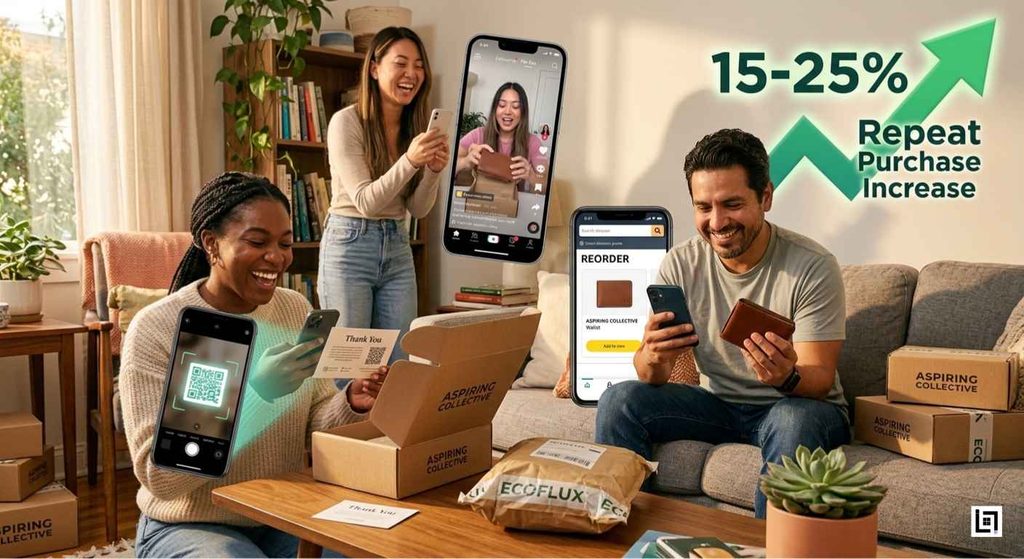
    Forward-thinking E-commerce brands using custom packaging QR codes are reporting:

    • 15-25% increase in repeat purchase rates (Amazon QR driving consumable reorders)
    • 40-60% engagement rate on social QR codes within the first month
    • 30% reduction in support tickets (Linktree hub providing instant answers)
    • $2-5 saved per order in packaging weight and printing costs
    • Measurable social growth from TikTok QR unboxing shares

    One skincare brand added a PDF user manual QR and discovered 70% of customers were struggling with the first-use application. They adjusted product instructions and saw a 12% decrease in returns.

    Implementation: Your Packaging QR Action Plan

    Step 1: Decide Your Mix. Choose 3-4 of the QR types above based on your product and business model. A subscription box might prioritize the reorder link. A tech gadget might lead with tutorial videos.

    Step 2: Create Dynamic QR Codes. Use a platform like ScanMyQR to create your codes. The “dynamic” part is crucial – it means you can update the destination link (change the support page URL, swap the tutorial video, refresh the discount code) without reprinting packaging.

    Step 3: Design for Visibility. Place codes strategically on your packaging:

    • Front/top: Your most important code (usually Amazon reorder or TikTok)
    • Inside flap: Secondary codes (support, manual)
    • Box bottom: Extra engagement (brand story, referral link)

    Make the code visible – surrounded by white space, not camouflaged into the pattern.

    Step 4: Track, Learn, Optimize. Monitor your ScanMyQR dashboard weekly. Which codes get scanned? When? From where? Adjust your packaging, copy, and placement based on real data – not assumptions.

    Why ScanMyQR for D2C Brands

    Unlike static QR code generators, dynamic QR platforms built for e-commerce give you:

    • Update ability without reprinting (seasons change, campaigns shift).
    • Unified dashboard managing codes across all product lines.
    • Scan analytics showing engagement patterns.
    • Scalability from single-product stores to multi-SKU operations.
    • Integration with your existing email, SMS, and analytics tools.

    The Future of Packaging Is Interactive

    The unboxing moment is your competitive advantage. While most brands still use packaging as a static billboard, you can transform it into an engagement engine – one strategic scan at a time.

    Your packaging doesn’t end the customer journey. It begins it.

    Ready to turn your packaging into a retention machine? Start with ScanMyQR and create your first set of dynamic QR codes today. Your repeat purchase rate will thank you!
  • Dynamic Event QR Codes: The Future of Paperless Events

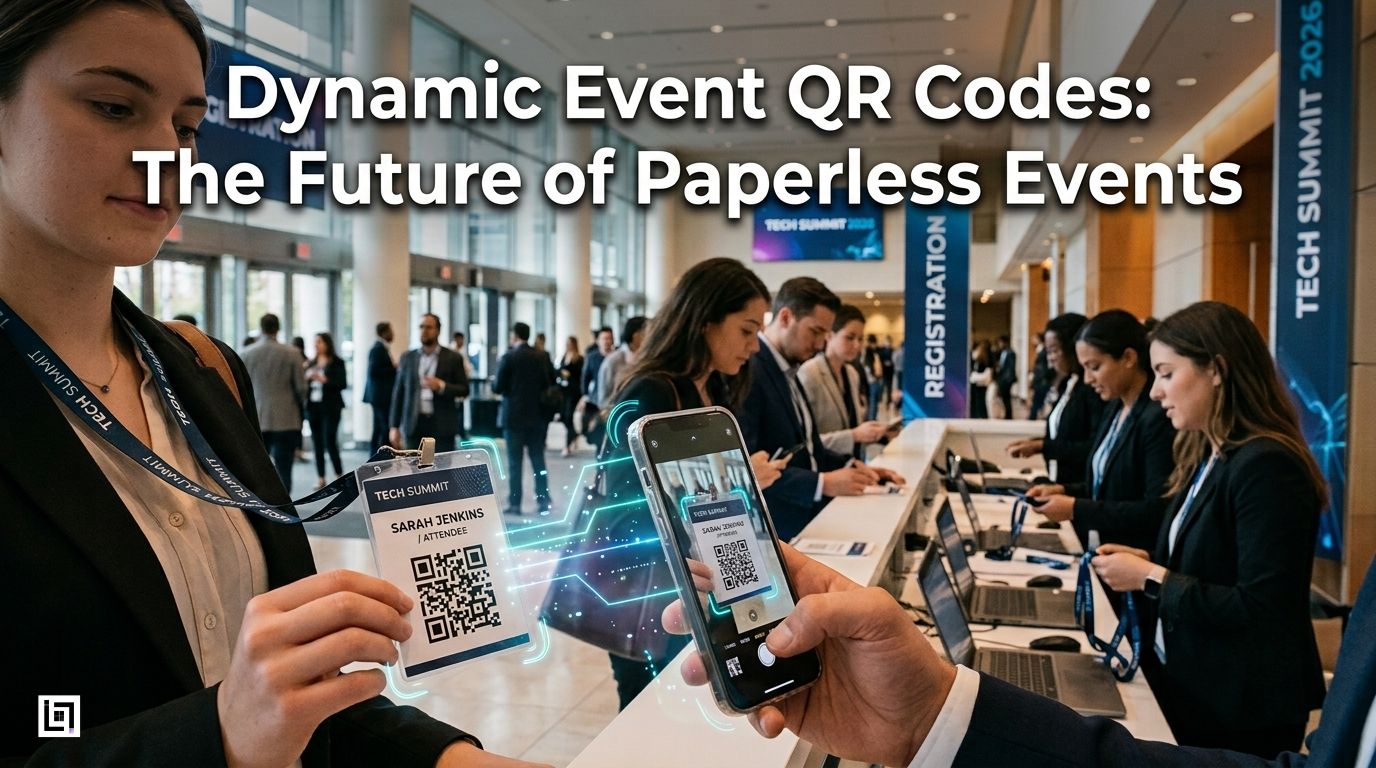
    Dynamic Event QR Codes: The Future of Paperless Events

    Every year, event planners print thousands of conference agendas. Full-color brochures. Multi-language guides. Detailed maps. Sponsor directories.

    And every year, speakers cancel last-minute. Room assignments change. Session times shift. The hundreds of printed programs become obsolete before the event even starts.

    But the real cost isn’t just the wasted paper and printing expenses—though that matters for your carbon footprint and budget. The real cost is the attendee experience. Guests arrive with outdated information. They miss keynotes because they didn’t know room locations changed. They skip valuable networking sessions because they never saw the updated schedule.

    There’s a better way: Dynamic Event QR codes.

    Instead of printing thousands of static documents, conferences and event organizers are shifting to a single, powerful QR code strategy: one code on every attendee badge linking to everything they need to know—updated in real-time, accessible instantly, and trackable for organizational insights.

    The Problem With Traditional Event Planning

    Event organizers typically print materials weeks in advance. They’ve committed to the design, locked in the vendor contracts, and paid for mass production. But events are dynamic. Speakers get sick. Sponsors want booth location changes. Panels get rescheduled due to high demand.

    With printed materials, you’re stuck. Your attendees have outdated information. Frustration builds, important sessions get missed, and sponsors lose engagement when attendees can’t find booth information. Networking suffers because they don’t know which sessions their connections are attending.

    The environmental impact is equally significant. According to the events industry, conferences produce approximately 2.4 kg of waste per attendee—much of it from printed materials that get discarded after the event. That’s thousands of pounds of paper, ink, and cardstock for a multi-day conference.

    The solution is surprisingly simple: paperless events powered by centralized QR codes.

    The Dynamic Event QR Codes Strategy

    Instead of printing materials, create one master event QR code on every attendee badge. That single code becomes a hub linking to everything attendees need—updated instantly, always accessible, and designed specifically for the event experience.

    Here’s the winning mix that forward-thinking event planners are using:

    1. Event Schedule Calendar QR

    Place a calendar QR for events on the attendee badge leading to a downloadable calendar file (.ics or Google Calendar format). Attendees scan and save all keynotes, breakout sessions, and networking events directly to their phones.

    When a speaker cancels or a room changes, you only need to update the calendar event details from the backend. The physical badge doesn’t change—but every attendee’s phone instantly reflects the update. Avoid reprinting, eliminate confusion, and make sure attendees never miss a session.

    2. Conference Agenda PDF QR

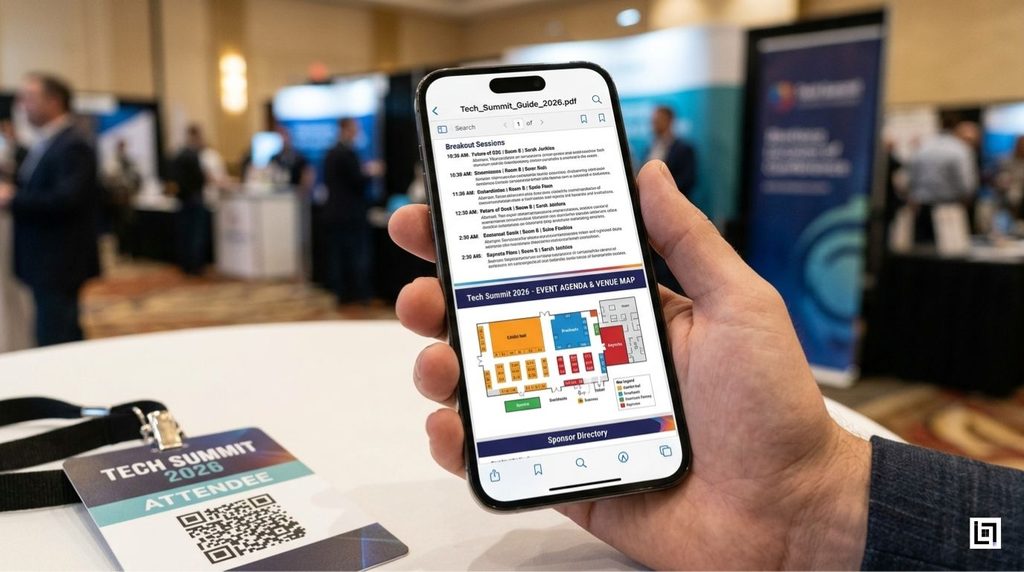
    Replace bulky printed agendas with a single conference agenda PDF QR. Attendees access a beautifully formatted, searchable PDF showing session times, room locations, speaker bios, and abstracts.

    Make it interactive: Include hyperlinks to speaker LinkedIn profiles, sponsor websites, or session-specific resources. Attendees get a superior digital experience compared to a flat piece of paper—and you eliminate printing costs entirely.

    3. Event Map/Venue Navigation

    A PDF map QR code solves one of the biggest attendee frustrations: getting lost. Link to an interactive venue map showing booth locations, restroom placement, food areas, and session room numbers. Update it in real-time as sponsor booth assignments change.

    4. X/Twitter Networking QR

    Place an X Twitter QR code linking to the event’s official hashtag and live conversation thread. This drives event networking QR engagement by connecting attendees in real-time, enabling them to tag each other in posts, find people in their industry, and build relationships beyond physical interactions.

    Attendees who scan this code join the live conversation. They see who else is attending, discover relevant discussions, and extend the networking experience beyond the physical event.

    5. Snapchat Event Filters

    A Snapchat QR for events links to custom-branded filters and lenses. Attendees use them for photos and videos, generating organic social proof and event visibility. Every photo tagged with your event filter becomes marketing material.

    6. Linktree Speaker Bios & Resources

    A Linktree support QR (adapted for events) centralizes speaker profiles, session resources, and follow-up links. Attendees scan and access speaker bios, LinkedIn profiles, presentation slides, and contact information in one organized hub.

    Why Dynamic Event QR Codes Transform Events

    Traditional QR codes are static—they point to a single destination that never changes. Print a QR code linking to outdated speaker information, and that’s what attendees get forever.

    Dynamic QR codes solve this. With trackable QR codes for events powered by platforms like ScanMyQR, you can:

    • Update destinations in real-time (schedule changes, sponsor booth shifts, new speaker information)
    • Track engagement to see which sessions or booths got the most scans
    • Gather analytics showing attendee movement patterns and interests
    • Optimize future events based on data showing which content resonated most

    The Organizational Intelligence Advantage

    Here’s the critical differentiator most event planners miss: high-volume traffic management analytics.

    When attendees scan your event QR codes throughout the conference, you collect data that transforms how you plan future events:

    • Which sessions were most popular (highest scan rates on schedule)
    • Which sponsor booths drove the most engagement
    • Which speakers generated the most follow-up interest
    • Peak attendance times showing when sessions reached capacity
    • Networking hotspots revealing which sessions led to the most Twitter/X interaction
    • Geographic patterns showing which attendee groups accessed which content

    One enterprise conference reported that their Tuesday 2 PM breakout session on AI generated 5x more scans than the same time slot on Wednesday. Next year, they doubled the room size and added a second session. Attendance jumped 40%.

    Another event organizer noticed sponsors with QR codes on their booth materials got 3x more scans than those without. They made QR codes mandatory for all sponsors.

    This is the power of ScanMyQR event solutions—you don’t just run an event, you optimize it with real attendee data.

    Real-World Impact: Metrics That Matter

    Conferences implementing centralized dynamic event QR codes are reporting:

    • 40-50% reduction in printed materials and production costs
    • 25-35% increase in networking engagement (X/Twitter participation)
    • 90%+ adoption of digital schedules (vs. printed)
    • 70% session attendance accuracy (fewer missed sessions due to outdated information)
    • Improved sponsor ROI (trackable booth engagement data)
    • Carbon footprint reduction of 80-90% (from paper elimination)

    One 5,000-person conference eliminated 15,000 printed agendas and saved $12,000 in production costs alone. They reinvested those savings into upgraded WiFi and better signage.

    Implementation: Your Paperless Event Blueprint

    Step 1: Create Your QR Code Hub

    Design a Linktree or similar hub page that includes:

    • Link to downloadable calendar file (.ics for all calendar apps)
    • PDF map of venue
    • X/Twitter event hashtag and networking thread
    • Snapchat filter link
    • Speaker directory with LinkedIn profiles

    Step 2: Generate Your Dynamic Event QR Code

    Use ScanMyQR event solutions to create a single master QR code that links to your Linktree hub. Make it dynamic—this ensures you can update all links without reprinting badges.

    Step 3: Integrate Into Attendee Badges

    Print the QR code prominently on every attendee badge. Make it large enough to scan easily from arm’s length.

    Step 4: Promote at Registration

    When attendees receive badges, explain the QR code’s purpose. Demo it by scanning the calendar and showing how to add sessions to their phones. Emphasize that updates will be instant.

    Step 5: Monitor Analytics

    Throughout the event, watch your ScanMyQR dashboard for engagement data. Which sessions are getting scanned most? Which sponsor booths? Use this information for:

    • Real-time adjustments (move popular sessions to larger rooms)
    • Speaker feedback (know which talks generated most interest)
    • Next-event planning (replicate what worked)

    Step 6: Post-Event Leverage

    After the event, attendees still have access to the QR hub. Extend the relationship by including:

    • On-demand video recordings
    • Post-event networking resources
    • Speaker follow-up contact information
    • Survey links for feedback

    Why Event Planners Love ScanMyQR

    Unlike basic QR code generators for conferences, ScanMyQR is built specifically for high-traffic events:

    • Reliability under high scanning volume (thousands of concurrent scans)
    • Real-time analytics showing engagement patterns during the event
    • Dynamic updates without reprinting materials
    • Scalability from 100-person meetings to 50,000+ person conferences
    • Integration-ready with event platforms like Eventbrite
    • Detailed reporting enabling data-driven event optimization

    Conclusion: The Future of Events Is Paperless

    The attendee experience isn’t defined by fancy printed materials anymore. It’s defined by accessibility, reliability, and real-time information. A single event QR code delivers all three while reducing costs and environmental impact.

    Make your next event paperless, give attendees better information, and help sponsors gain trackable engagement insights. And you’ll have organizational insights that transform how you plan future conferences.

    One QR code. Everything they need. Always updated.

    That’s the paperless event advantage.

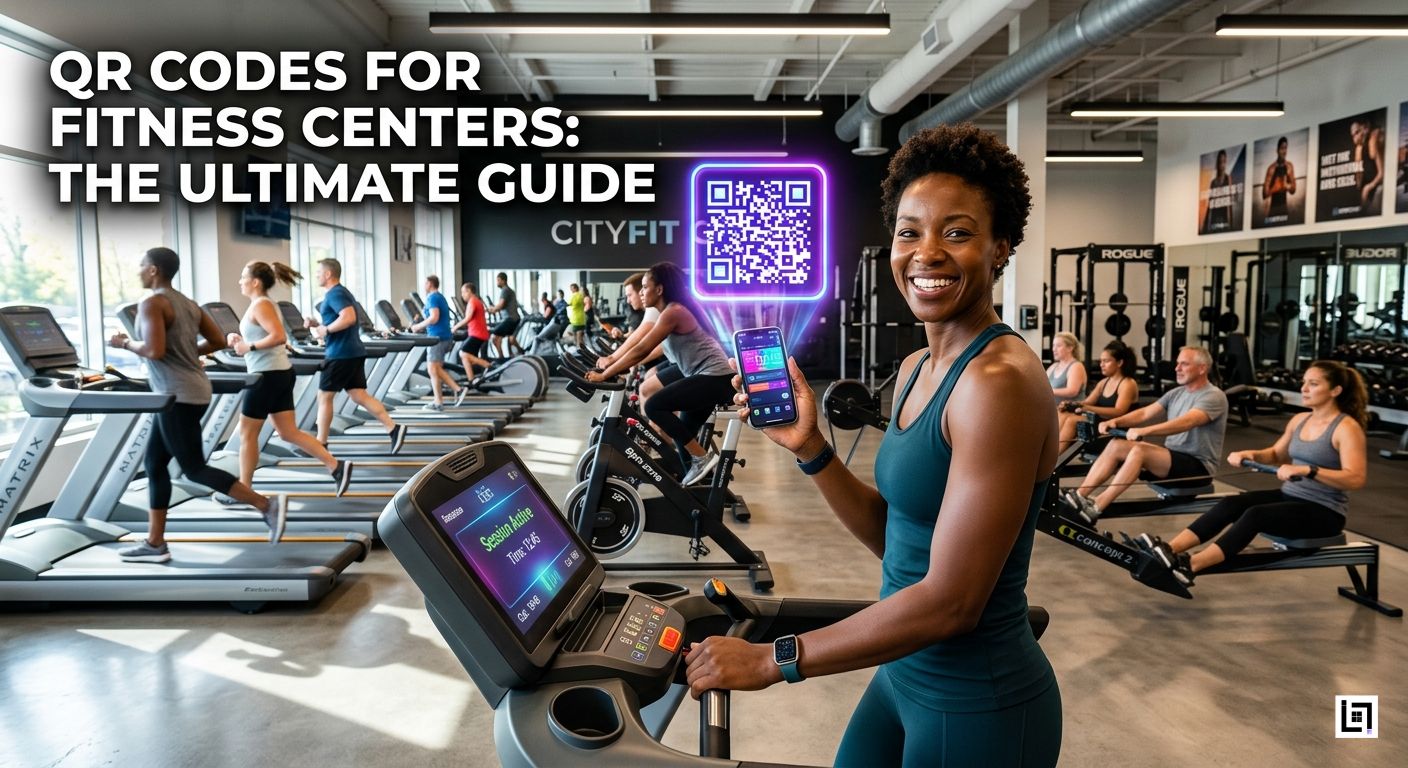
  • QR Codes for Fitness Centers: The Ultimate Guide

    QR Codes for Fitness Centers: The Ultimate Guide

    Member retention is the biggest hurdle for gyms. Statistics show that up to 50% of gym members quit within the first six months, making engagement the difference between a thriving fitness facility and one struggling to fill its classes. But what if there was a simple, tech-forward solution to keep your members engaged and reduce churn?

    Time for using: Dynamic QR codes for fitness centers.

    Today’s gym members expect convenience. They want quick access to class schedules, seamless payment experiences, and personalized content—without friction. The good news? A strategic QR code for gym workflow can deliver all of this with a single scan.

    The QR Code Mix That Works for Fitness

    Modern fitness centers operate across multiple platforms: music for motivation, calendars for scheduling, payment systems for memberships, and social media for community building. Rather than forcing members to navigate between apps, a dynamic QR for studios strategy brings everything together.

    Here’s the winning combination:

    1. Spotify Playlist QR Codes

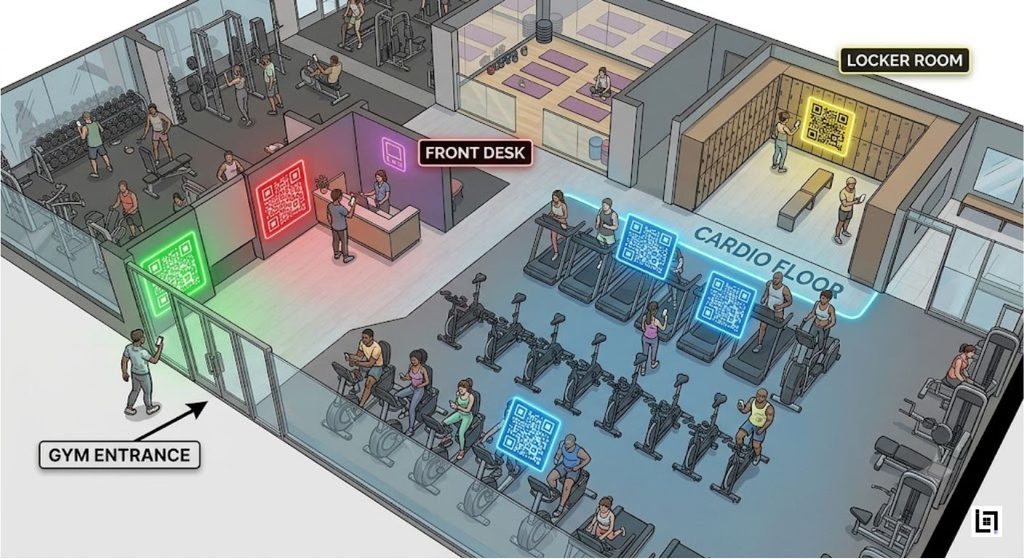
    Place a high-energy Spotify playlist QR on cardio machines—treadmills, stationary bikes, and rowing machines. Members scan once and instantly access a perfectly curated workout mix. The result? Longer, more motivated workouts and increased machine utilization.

    2. Google Calendar Integration

    Post a gym class schedule QR code at your front desk. Members scan and automatically save your weekly Zumba, yoga, HIIT, and spin classes to their phones. No more missed sessions, better attendance rates, and reduced scheduling confusion.

    3. Membership Payment QR

    Streamline sign-ups and membership renewals with a gym membership payment QR at the registration desk. First-time visitors can join instantly. Existing members can renew their subscriptions without paperwork.

    4. Instagram Fitness Tips

    A Spotify playlist QR code isn’t your only social tool. Post an Instagram fitness QR at your entrance leading to your community feed, workout challenges, and member transformations. This builds social proof and encourages members to engage with your brand beyond the gym walls.

    5. Wi-Fi Access

    Include Wi-Fi login QR codes for members who want to stream content while working out. Seamless connectivity = happier members.

    Why Traditional QR Codes Fall Short

    Most gyms print static QR codes and hope they work. But what happens when you update your class schedule next month? That printed QR on the front desk is now outdated. Members scan it, see incorrect information, and trust erodes.

    This is where traditional QR codes fail fitness centers.

    The ScanMyQR Difference: Dynamic QR Codes for Studios

    A dynamic QR code manager solves this problem entirely. With ScanMyQR, you manage all your QR codes from one centralized account. The printed code stays the same—but the destination link updates in real-time.

    Here’s the workflow:

    1. Create your QR codes in ScanMyQR (Spotify playlists, class schedules, payment links, Instagram profiles, Wi-Fi login)
    2. Print them across your facility—machines, front desk, bathroom mirrors, locker rooms
    3. Update the destinations whenever you need—no reprinting required
    4. Track scan analytics to see which playlists drive engagement, which class times are most popular, and which marketing channels convert

    When your Zumba class moves from Tuesday to Wednesday, simply update the calendar link in your ScanMyQR dashboard. Every printed code redirects to the new schedule automatically. Your members get accurate, up-to-date information every single time.

    Practical Implementation for Gyms

    On the Cardio Floor: Place Spotify playlist QRs on treadmills, ellipticals, and stationary bikes. Label them: “High-Energy Cardio Mix” or “Running Motivation.” Members instantly access music without fumbling with Bluetooth pairing.

    At the Front Desk: Post a prominent gym class schedule QR code so members can save weekly schedules directly to their calendars. Add a Google review QR for fitness facilities nearby so satisfied members can leave testimonials—critical for new member acquisition.

    In the Lobby: Display a unified QR linking to your latest Instagram content, member transformations, and fitness challenges. This drives social engagement and community building.

    Membership Area: Keep a gym membership payment QR readily available for renewals, upsells to premium tiers, or personal training packages.

    Measuring Success: The Analytics Advantage

    ScanMyQR’s analytics dashboard reveals critical insights:

    • Which Spotify playlists drive the longest workouts
    • Which class times have the highest scan rates
    • Which Instagram content converts members to social followers
    • Peak scanning hours (optimize your marketing timing)

    This data directly informs your gym marketing strategy. If evening yoga classes see double the scans at 5 PM, promote that time slot. If a particular playlist drives 3x more cardio machine usage, expand that collection.

    The Retention Impact

    Here’s what gyms typically see after implementing a unified QR code manager strategy:

    • Class attendance increases by 15-25% (members don’t forget schedules)
    • Member check-in frequency rises by 10-20% (frictionless access to schedules and playlists)
    • Social media growth accelerates (Instagram QR codes build community)
    • Membership renewal rates improve (seamless payment options reduce friction)
    • Churn rate drops (higher engagement = stronger commitment)

    Getting Started: Your QR Code Action Plan

    1. Audit your facility: Where do friction points exist? (Schedule sharing? Playlist access? Payment delays?)
    2. Create 5-7 key QR codes in ScanMyQR (Spotify, Calendar, Payment, Instagram, Wi-Fi)
    3. Print and place strategically—high-traffic areas first (cardio floor, front desk, entrance)
    4. Train staff to explain the QR code benefits to new and existing members
    5. Monitor analytics weekly—adjust destinations and placement based on scan data
    6. Update seasonally (new workout playlists, class schedule changes, promotional offers)

    Why Fitness Centers Love ScanMyQR

    Unlike basic static QR generators, ScanMyQR is purpose-built for businesses that evolve:

    • Dynamic updates without reprinting
    • Unified dashboard for all your codes
    • Real-time analytics on member engagement
    • Scalability from single studios to multi-location chains
    • Integration-ready with your existing tech stack

    Conclusion: The Future of Gym Engagement

    Member retention doesn’t require expensive redesigns or complicated technology. A strategic dynamic QR for studios approach—powered by ScanMyQR—delivers convenience, engagement, and data insights that drive growth.

    Your members want quick access to music, schedules, payments, and community. QR codes bridge that gap in a single scan.

    Start today. Your retention rate—and your bottom line—will thank you.

  • 5 Essential QR Codes For  Restaurants & Cafes 2026

    5 Essential QR Codes For Restaurants & Cafes 2026

    The Death of Table Tents: Why Physical Menus Are Becoming Obsolete

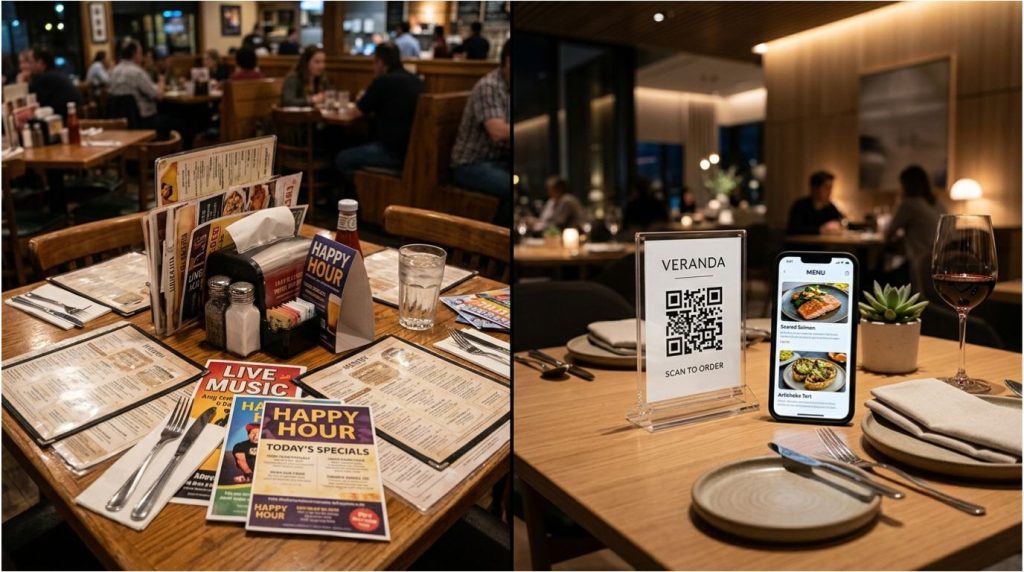
    Walk into most restaurants today, and you’ll still see the same scene your grandmother witnessed decades ago: laminated menus stuffed in baskets, worn table tents promoting specials, and printed flyers advertising upcoming events.

    But the hospitality landscape is shifting—and fast.

    In 2026, the most successful restaurants and cafes aren’t printing static menus anymore. They’re using a modern alternative that costs pennies to deploy yet delivers incredible flexibility, engagement, and operational efficiency.

    The culprit? Dynamic QR codes.

    The problem with traditional menus is brutal: every price change, seasonal item swap, or promotional update requires reprinting. For a restaurant with 50 tables, that’s not just annoying—it’s expensive and wasteful. But more importantly, it’s outdated.

    Customers today expect frictionless experiences. They want to connect on social media, pay without touching the terminal, leave feedback instantly, and access Wi-Fi seamlessly—all from their table.

    That’s where the tabletop bundle comes in.

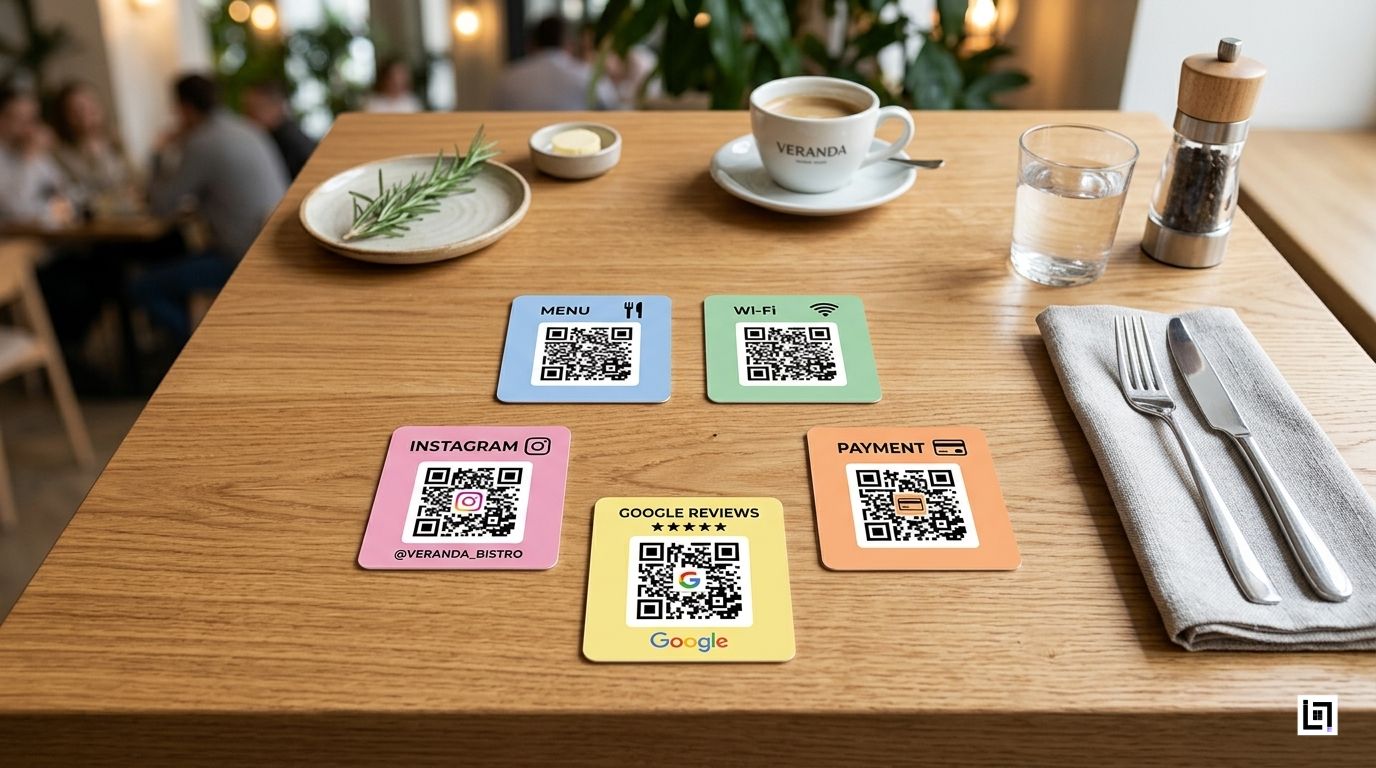
    The Tabletop Bundle: Five QR Codes for Restaurants that Complete the Customer Journey

    Imagine this: A customer sits at a table. Within 30 seconds, they’ve:

    1. Connected to Wi-Fi (no password chaos)
    2. Viewed your digital menu (and added items to a cart)
    3. Completed a contactless payment (no card swapping)
    4. Left a Google Review (you got a 5-star rating)
    5. Followed your Instagram (they’re now a brand advocate)

    This isn’t a fantasy—it’s the new standard for hospitality.

    Here are the 5 essential QR codes for restaurants:

    1. Digital Menu QR Code (PDF)

    Menu QR code

    The centerpiece of your tabletop bundle. A single QR code on your table tent links customers to your complete menu as a PDF. They tap, they browse, they order.

    Why this matters: No printing costs. No outdated items on the menu. No confusion about which dishes are available today.

    With a dynamic QR code for a restaurant menu, you update prices or items in real time—all from a single dashboard. Your Tuesday lunch special? Add it in seconds. That appetizer is out of stock? Remove it instantly. Customers always see the truth.

    2. Wi-Fi Connect QR Code

    Stop repeating your Wi-Fi password 50 times a shift.

    A simple scan of the Wi-Fi QR code auto-connects customers to your network without typing a single character. It’s frictionless, faster, and leaves a positive first impression.

    Hidden benefit: You can track which tables are connecting and when—valuable data for understanding peak usage and customer behavior.

    3. Google Reviews QR Code

    Getting customers to leave reviews is notoriously difficult. They have to find you on Google, navigate to Reviews, and write something meaningful—all from their phone, mid-experience.

    A Google review QR code for a restaurant placed strategically on your table tent changes everything. After they’ve finished eating and are satisfied, one tap takes them directly to your Google Review page.

    The result? More authentic reviews, better visibility in local search, and stronger credibility signals to potential customers.

    4. Instagram Follow QR Code

    Building a loyal community on Instagram is essential for modern restaurants. But asking customers to search and follow manually? That’s a lost opportunity.

    An Instagram QR code for cafes on your table tent makes it effortless. They scan, they follow, they see your latest content next week. Over time, this builds genuine engagement and a repeatable marketing channel you own (unlike Google or Facebook advertising).

    5. Contactless Payment QR Code

    The final piece: touchless payment QR codes streamline checkout without requiring a card terminal.

    Whether customers use Stripe, PayPal, or another payment processor, a single scan completes the transaction. It’s faster, safer, and eliminates the awkward moment of handing over a card or waiting for the terminal to come around.

    Why Dynamic QR Codes for Restaurants Beat Static Alternatives

    Here’s where most restaurants get it wrong: they print QR codes into their materials and call it a day.

    Static QR codes are the menu equivalent of a printed contract—once it’s out, it’s locked.

    Dynamic QR codes let you:

    • Update menu items and prices instantly (no reprinting)
    • Change destinations on the fly (point to different pages, promotions, or campaigns)
    • Track analytics (see which tables scan the most, when, and what they’re engaging with)
    • Manage from a single dashboard (no technical skills required)

    This is the competitive advantage that separates thriving restaurants from struggling ones.

    The ScanMyQR Advantage: One Dashboard, Complete Control

    Managing five separate QR codes shouldn’t require five separate accounts. That’s chaos.

    With ScanMyQR, you get:

    • Centralized Dashboard: Manage your menu QR, Wi-Fi QR, review QR, social QR, and payment QR all in one place
    • Real-Time Menu Updates: Change prices, mark items out of stock, add seasonal specials—all reflect instantly across every table
    • Analytics Insights: See which tables are scanning for menus vs. payments vs. reviews. Understand customer behavior patterns
    • Dynamic Management: Update where your QR codes point without reprinting a single table tent
    • Professional Branding: Maintain consistency across all QR implementations with your brand colors and logos

    When your menu changes seasonally (and it always does), you’re not reprinting table displays or tablecloths. You’re updating a database. When you launch a new promotional campaign, customers who scanned your menu last month see the updated content automatically.

    For restaurants managing multiple locations, this efficiency multiplies.

    Why This Matters for You?

    QR codes for Restaurant marketing aren’t just about convenience — they’re about revenue generation and operational cost reduction:

    • Increase restaurant reviews through friction-free feedback
    • Drive social media growth (Instagram, TikTok, Facebook)
    • Reduce operational friction (fewer customer questions about Wi-Fi passwords, menu items, payments)
    • Gain competitive intelligence (which items are scanned most? When? By how many tables?)

    The restaurants and cafes winning in 2026 aren’t the ones with fancier plating. They’re the ones with smarter operations.

    Start Your Tabletop Bundle Today

    The “Invisible Waiter” isn’t a person—it’s a system. It’s the quiet efficiency of QR codes working in concert to serve your customers better, gather data smarter, and let your team focus on what they do best: hospitality.

    Ready to modernize your restaurant or cafe? Manage restaurant QR codes with a platform built for hospitality. One dashboard. Five powerful codes. Unlimited possibilities.

    Your customers are ready for 2026. Is your menu?

  • Entertainment QR Code: Revolutionizing the Fan Experience

    Entertainment QR Code: Revolutionizing the Fan Experience

    The Problem: Losing Fans the Moment the Show Ends

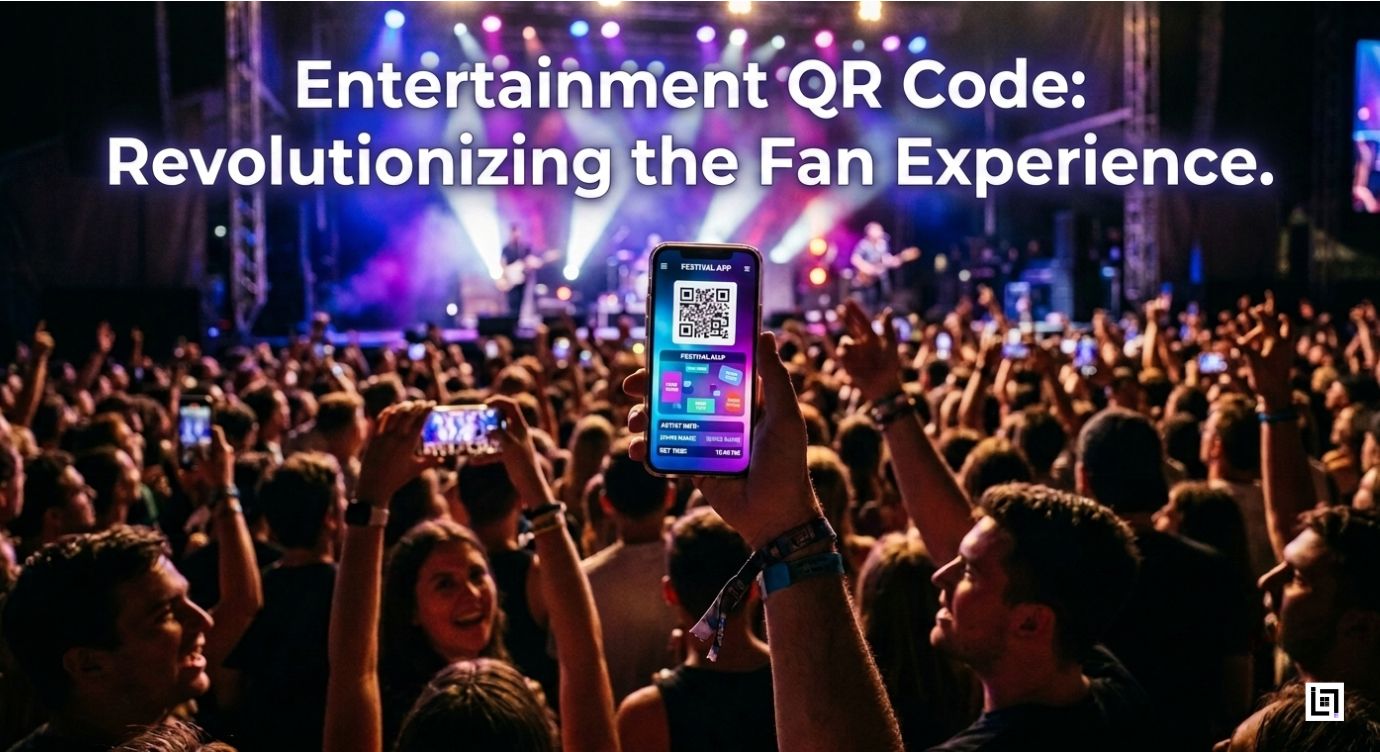
    The curtain drops. The final chord fades. The crowd erupts—thousands of people experiencing a live moment together, connected by shared energy.

    Then? They leave. And you lose them.

    Entertainment marketers face a critical challenge: converting physical attendance into digital engagement. Once fans step outside the venue, they disconnect. No follow-up stream, podcast episode, or online merchandise purchase.

    Why? Friction.

    The typical experience:

    • Even if a fan loved the show, they may not remember the artist’s name afterward.
    • They try typing a URL on their phone at the venue (WiFi is slow)
    • Then, when they search for the streaming app, they can easily get lost in endless recommendations.
    • By the time they finally find the artist, the moment has already passed.

    The result: Missed sales. Lost followers. Broken fan connections.

    Event organizers and artists know this problem intimately. They book venues, promote unforgettable shows, and build loyal audiences. Yet they can’t effectively bridge the gap between live experience and digital platform—and that costs them direct revenue, streaming numbers, and long-term fan loyalty.

    But what if, instead, fans could access your digital presence instantly with a single scan?

    The Solution: Dynamic Entertainment QR Code

    Dynamic QR codes solve this problem by removing friction entirely.

    Here’s the shift: Instead of asking fans to type, search, or remember, you simply give them a QR code. One scan is all it takes to unlock instant access to your entire digital ecosystem.

    But here’s the catch—not all QR codes are the same.

    Static QR codes (free) embed data permanently in their design. Useful for one-time campaigns, but they can’t be updated without reprinting thousands of tickets.

    Dynamic QR codes (powered by platforms like ScanMyQR) live on a cloud dashboard. Change the destination anytime. Update instantly. Track every scan.

    For entertainment? Dynamic QR codes are the game-changer.

    Two Powerful Use Cases: PDF Playbills & Spotify Integration

    Use Case #1: PDF QR Codes for Digital Playbills and Festival Maps

    Imagine this: A fan walks into your concert venue. Instead of grabbing a paper program—which costs money to print and often ends up crumpled or discarded—they simply scan a QR code at the entrance.

    Instantly, they download a digital playbill that includes:

    • Complete artist lineup with bio links
    • Interactive stage map showing bathroom and food locations
    • Real-time schedule updates (artist running late? Update instantly)
    • Hyperlinks to each artist’s Spotify profile
    • Merchandise ordering links
    • Social media handles for live tweeting

    Benefits:

    • Cost savings: No printing expenses
    • Instant updates: Price drop? Lineup change? Update the PDF in seconds—all phones get the new version
    • Data capture: Track how many fans downloaded the guide, which sections they viewed
    • Eco-friendly: Zero paper waste

    Use Case #2: Spotify QR Codes for Direct Streaming

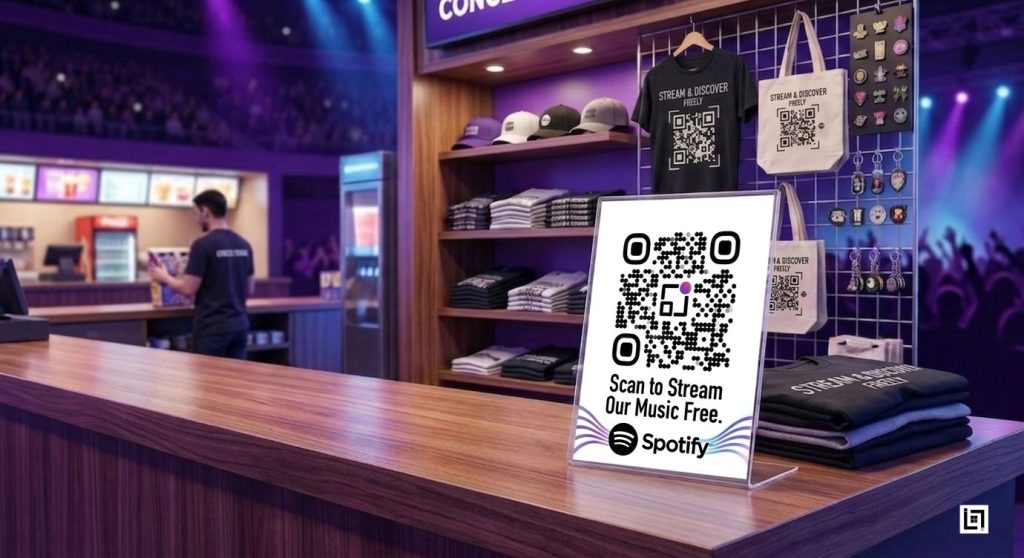
    Next, place a dynamic Spotify QR code on concert merchandise, ticket stubs, or table tents.

    When fans scan, they can instantly reach your Spotify artist page; as a result, with just one tap, there’s no searching and no typing required.

    Where to place these codes:

    • On concert tickets (drives streams immediately after purchase)
    • On merch packaging (merchandise becomes a marketing tool)
    • On venue table tents (captures impulse listeners)
    • On band press kits (industry professionals stream instantly)

    The magic: Fans listen immediately. Spotify counts streams. Algorithms recommend your music to similar listeners. You build a streaming audience that night.

    Step-by-Step: How to Launch Your First Campaign on ScanMyQR

    Ready to implement this? Here’s exactly how:

    Step 1: Create Your ScanMyQR Account

    Action: Go to https://scanmyqr.co/ and sign up.

    Enter your email, create a password, and verify your account. Then login to the dashboard.

    Step 2: Generate a Dynamic PDF QR Code (for Your Digital Playbill)

    In the ScanMyQR dashboard:

    1. Click “Create New QR Code”
    2. Select “PDF” as the code type
    3. Upload your playbill PDF (or click the template builder to design one)
    4. Name it: Concert Playbill_[Venue Name]_[Date].
    5. Click “Generate Code”

    Now the magic happens: You have a dynamic PDF QR code.

    Update the PDF anytime from your dashboard. Because all previously printed codes automatically point to the latest version, there’s no need for reprinting.

    Step 3: Customize the QR Code Design

    Still in the dashboard:

    1. Click “Design” on your newly created code
    2. Change the color to match your brand
    3. Add your artist logo in the center (optional but powerful)
    4. Add a label: “Scan for Full Festival Map & Artist Info”
    5. Preview on your phone to ensure it scans properly

    Step 4: Download & Print

    1. Download the code as PNG (for digital use) or SVG (for printing)
    2. Print on large-format posters for the venue entrance
    3. Embed digital versions in email promotions
    4. Post on social media leading up to the event

    Step 5: Generate a Dynamic Spotify QR Code (for Music Promotion)

    Spotify QR Code

    Back in the dashboard:

    1. Click “Create New QR Code”
    2. Select “URL” as the code type
    3. Paste your Spotify artist link: https://open.spotify.com/artist/[YOUR-ARTIST-ID]
    4. Name it: Spotify Stream_[Event Name]
    5. Click “Generate Code”

    The key difference is that this code is dynamic; therefore, if you want to promote a specific album or playlist instead, you can instantly update the URL without needing a new code.

    Step 6: Deploy on Merchandise & Tickets

    1. Print Spotify codes on concert tickets (before printing)
    2. Add to merch packaging (t-shirts, hoodies, vinyl)
    3. Place table tents on venue concession stands
    4. Add to band press kits sent to media

    Step 7: Monitor & Update in Real Time

    As the event approaches:

    1. Log into your ScanMyQR dashboard
    2. Check “Analytics” to see real-time scan data
    3. If an artist cancels? Update your PDF playbill instantly
    4. If a price changes? Update that link immediately
    5. Fans with already-printed codes get the updated information

    Analytics Breakdown: Measuring ROI

    Here’s what separates dynamic QR codes from paper flyers: data.

    The ScanMyQR analytics dashboard shows you exactly how fans engaged with your physical-to-digital strategy:

    MetricWhat It ShowsWhy It Matters
    Total ScansHow many fans engaged with your codeBaseline engagement rate
    Scan HotspotsWhich venue locations generated the most scans?Optimize placement for future events
    Geographic DataWhere scans originated (which city/neighborhood)Understand your audience’s geography
    Device TypeiOS vs Android breakdownKnow your audience’s tech preferences
    Peak HoursWhen fans scanned most (during show? after?)Time follow-up marketing perfectly
    Conversion RateScans → Spotify follows or downloadsTrue ROI measurement
    Repeat ScansDid fans scan multiple times?Indicates high engagement/interest

    Real example: Your venue’s main entrance generated 340 scans between 7-8 PM (show start time). Your merch table generated 180 scans during intermission. This tells you: place more codes near the entrance next time.

    Removing Friction = Securing Fan Loyalty

    The entertainment industry thrives on moments. Live performances create an emotional connection that recorded music cannot replicate.

    Dynamic QR codes preserve that connection by removing barriers.

    Instead of “I’ll find them later” (and never do), fans convert to followers instantly. Instead of asking fans to type URLs in a noisy venue, you give them a 2-second path to your digital ecosystem.

    The result?

    • Higher streaming numbers
    • Direct merchandise sales
    • Larger email lists (if you gate the playbill)
    • Quantified marketing ROI
    • Fan data for future campaigns

    Entertainment marketers no longer have to choose between physical presence and digital engagement. Dynamic QR codes enable both—and measure the bridge between them.

    Take Action: Launch Your First Campaign Today

    Your next show, your next festival, or your next album release.

    The fans are there, ready to engage. They just need a frictionless path forward.

    Ready to revolutionize your fan experience?

    Start building your first dynamic QR code campaign at ScanMyQR. Generate a PDF playbill. Create a Spotify code. Track every scan. Update instantly.

    The future of entertainment marketing isn’t about printing more flyers. It’s about connecting physical moments to digital platforms—instantly.

    Begin now. Your next breakthrough fan engagement is one scan away.